Table of Contents
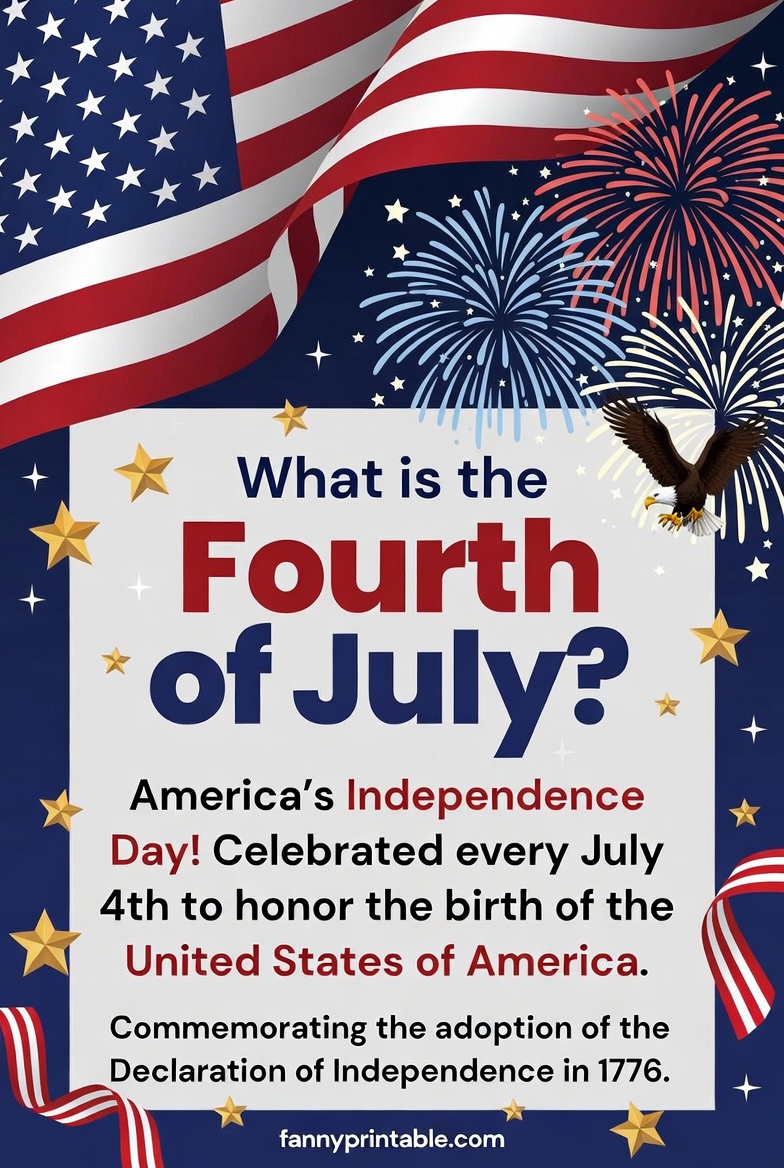
What Is the Fourth of July? History, Traditions & Meaning – The Fourth of July, also known as Independence Day, stands as one of the most significant and joyful holidays in the United States. Every year on July 4, Americans come together to celebrate the birth of their nation and the enduring ideals of freedom and self-government. But what exactly is the Fourth of July, and why does it hold such a special place in American culture?
In this guide, we explore the rich history behind the date, how the holiday evolved, the traditions that define it today, and meaningful ways families and educators can celebrate.
The Historical Origins of the Fourth of July
The story of the Fourth of July begins in 1776, during a pivotal moment in American history. Understanding what the Fourth of July commemorates requires looking back at the events that led the 13 colonies to declare independence from Great Britain.
The Adoption of the Declaration of Independence
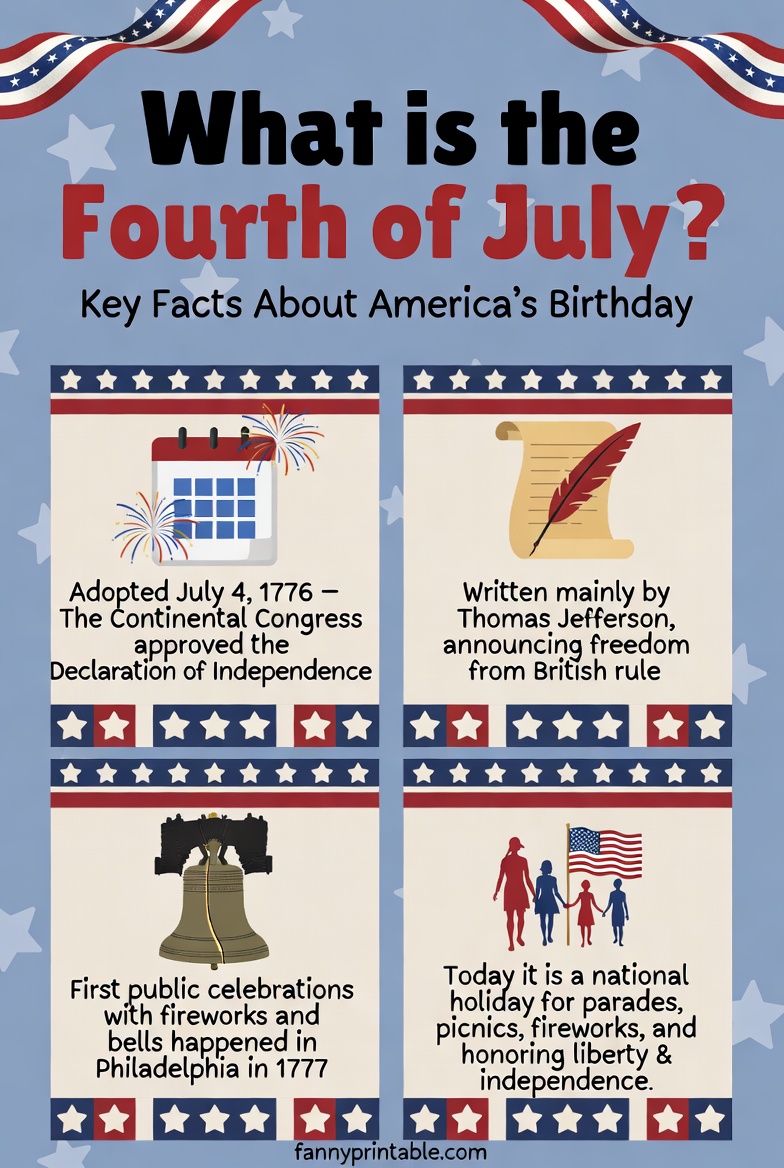
On July 4, 1776, the Second Continental Congress formally adopted the Declaration of Independence in Philadelphia. This document, primarily drafted by Thomas Jefferson with input from John Adams, Benjamin Franklin, Roger Sherman, and Robert R. Livingston, announced the colonies’ separation from British rule and articulated the principles of liberty and equality.
The Declaration was not fully signed on July 4 — most signatures were added on August 2 — but July 4 marks the day Congress approved the final text. The first public reading took place on July 8, 1776, in Philadelphia.
For the official transcription and high-resolution images of the original document, visit the National Archives.
The First Celebrations in 1777
The first organized Fourth of July celebrations occurred in 1777 in Philadelphia and Boston. These early events included fireworks, cannon fire, parades, and public readings of the Declaration — traditions that continue today. Founding Father John Adams famously predicted that future generations would celebrate with “pomp and parade, with shows, games, sports, guns, bells, bonfires, and illuminations.”
Learn more about early celebrations from Mount Vernon.
How July 4 Became America’s National Holiday?
While Americans have celebrated July 4 since 1776, it did not become an official federal holiday until much later. Congress made Independence Day a paid holiday for federal employees in 1938, and it has been observed nationwide ever since.
Today, the Fourth of July serves as both a patriotic commemoration and a summer celebration of freedom, community, and national pride. In 2026, the United States marks the 250th anniversary of the Declaration, making this year’s celebrations especially meaningful.
Popular Traditions That Define the Fourth of July
Modern celebrations blend historical remembrance with festive summertime activities enjoyed by millions of Americans.
Fireworks Displays
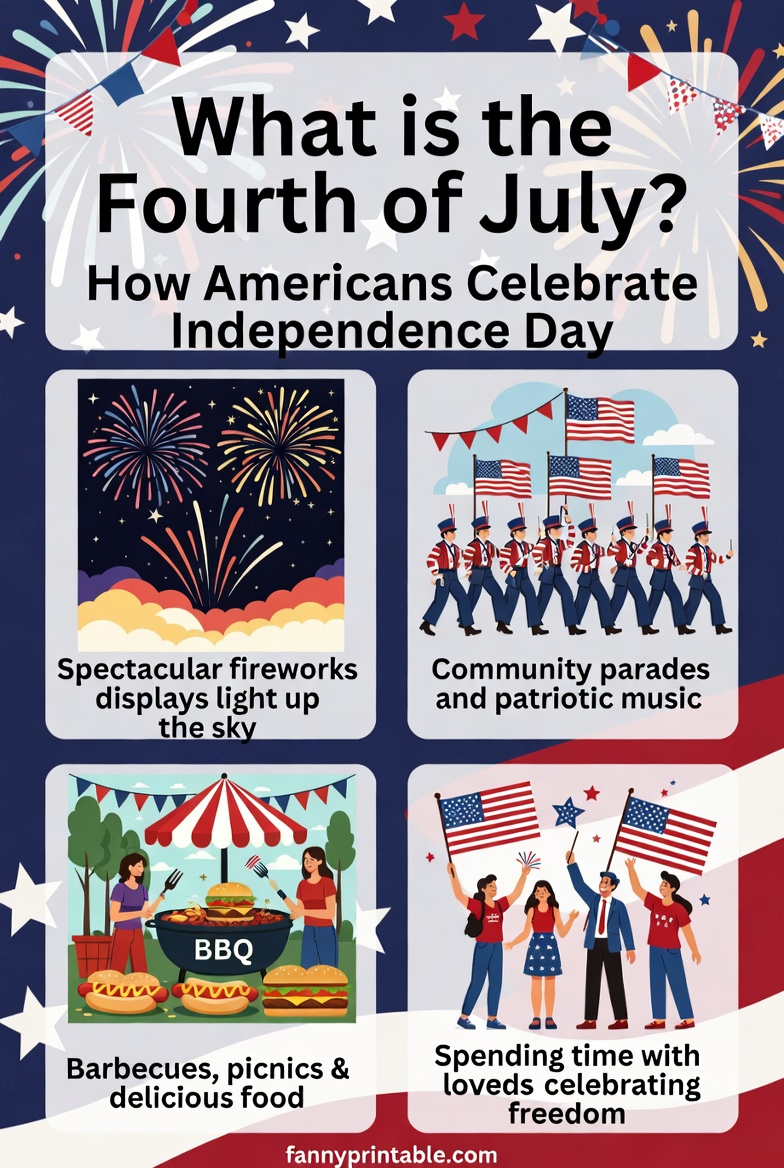
Fireworks have been part of Fourth of July celebrations since the very first events in 1777. Cities and towns across the country host spectacular public displays, while many families enjoy backyard fireworks where permitted.
Parades and Community Events
Parades featuring marching bands, veterans, floats, and local organizations take place in thousands of communities. The oldest continuous Independence Day parade is held in Bristol, Rhode Island, dating back to 1785.
Barbecues, Picnics, and Family Gatherings
Backyard barbecues with hot dogs, hamburgers, corn on the cob, and watermelon are quintessential Fourth of July activities. Families and friends gather for picnics, games, and quality time together.
Important Symbols of the Fourth of July
Several powerful symbols help tell the story of American independence:
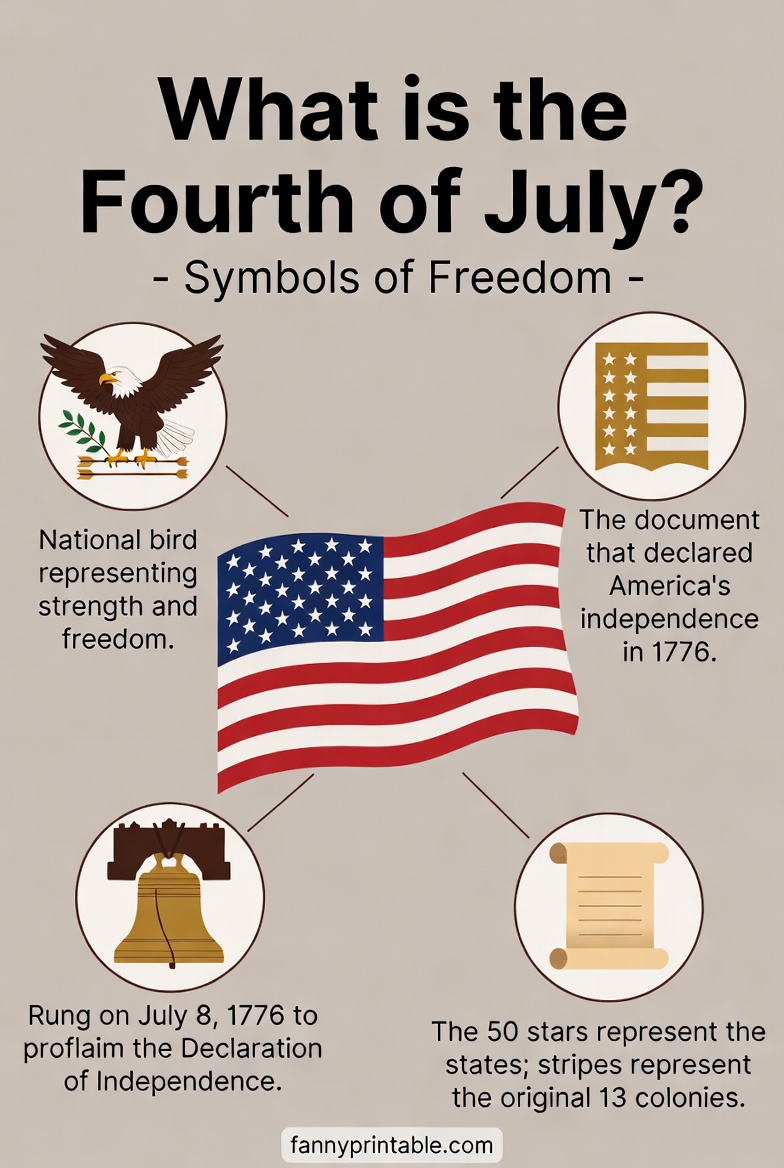
- The American Flag — Represents the 50 states and the original 13 colonies.
- The Bald Eagle — Chosen as the national bird for its strength and freedom.
- The Liberty Bell — Rung on July 8, 1776, to announce the first public reading of the Declaration.
- Fireworks — Symbolize the “illuminations” recommended by John Adams and the explosive birth of a new nation.
Fun Facts About the Fourth of July
- John Adams and Thomas Jefferson both died on July 4, 1826 — exactly 50 years after the Declaration was adopted.
- The Liberty Bell was actually rung on July 8, 1776, not July 4.
- Fireworks were used in the very first organized celebrations in 1777.
- The holiday was not a paid federal holiday until 1938.
- Americans consume an estimated 150 million hot dogs on the Fourth of July.
How to Celebrate the Fourth of July Safely?
While fireworks are a highlight for many, safety must come first. The U.S. Consumer Product Safety Commission (CPSC) offers these important guidelines:
- Buy only legal consumer fireworks from reputable retailers.
- Never allow young children to play with or ignite fireworks, including sparklers (which burn at about 2,000°F).
- Keep a bucket of water or garden hose nearby.
- Never use fireworks while impaired by alcohol or drugs.
- Light one firework at a time and move away quickly.
- Never try to relight or pick up a firework that has not fully ignited.
For complete safety information, visit the CPSC Fireworks Safety page.
Teaching Kids About the Fourth of July
Helping children understand the meaning behind the holiday builds appreciation for American history and values. Simple activities like reading the Declaration together (in kid-friendly language), discussing the symbols of freedom, and participating in local parades or fireworks shows make the day memorable and educational.
Free Fourth of July Printables and Educational Resources
Whether you are a teacher planning classroom activities or a parent looking for fun at-home projects, these free resources from trusted websites are excellent options:
- Crayola Free 4th of July Coloring Pages — Patriotic designs featuring flags, fireworks, and more.
- ABCmouse 4th of July Coloring Pages — Kid-friendly pages celebrating America’s 250th anniversary.
- Superstar Worksheets Fourth of July Printables — Coloring pages, mazes, games, and activity sheets for various grade levels.
- National Archives July 4th Resources — Historical context, exhibits, and educational materials from the official home of the Declaration.
- Mount Vernon – The Earliest July 4 Celebrations — In-depth historical article perfect for older students and families.
These resources are provided by the respective organizations and are free to download and use.
Make This Fourth of July Meaningful for Your Family
Beyond the festivities, the Fourth of July offers a chance to reflect on the principles of liberty and the ongoing American story. Attend a local parade, watch a fireworks display together, discuss what freedom means to your family, or simply enjoy time outdoors with good food and company.
As America approaches its 250th anniversary in 2026, this year’s celebrations carry extra significance. However you choose to mark the day, remembering the courage of those who declared independence in 1776 keeps the spirit of the Fourth of July alive for future generations.
Happy Fourth of July!