Table of Contents
Thanksgiving in the United States is observed on the fourth Thursday in November. In 2026, it falls on Thursday, November 26; in 2027, it falls on Thursday, November 25. Many households use the day for a shared meal, time with others, and gratitude. Its history also calls for attention to Native perspectives and to the experiences that a simple holiday story can leave out.
When Is Thanksgiving?
| Year | U.S. Thanksgiving Date |
|---|---|
| 2026 | Thursday, November 26 |
| 2027 | Thursday, November 25 |
| 2028 | Thursday, November 23 |
| 2029 | Thursday, November 22 |
| 2030 | Thursday, November 28 |
The fourth-Thursday rule comes from the federal holiday’s legal history, described by the National Archives. The dates above follow that rule. School breaks, travel schedules, restaurant hours, and workplace leave policies need their own checks; they do not all follow a single national schedule.
Thanksgiving History in Context
The 1621 harvest gathering at Plymouth involved Wampanoag people and English colonists. It took place in a much longer Indigenous history. The Smithsonian National Museum of the American Indian timeline places that event within Wampanoag history and the changes brought by colonization.
The modern federal holiday developed later. George Washington issued a thanksgiving proclamation in 1789. Abraham Lincoln’s 1863 proclamation helped establish a recurring national observance, and legislation in 1941 fixed the holiday on November’s fourth Thursday. Those milestones do not make the 1621 gathering a complete explanation of today’s holiday.
People relate to the day in different ways. Some Native people observe a National Day of Mourning, a perspective discussed in the National Archives’ historical perspectives exhibit. A respectful conversation can acknowledge those views alongside a family’s own traditions.
Printable Thanksgiving Reference and Reflection Sheets
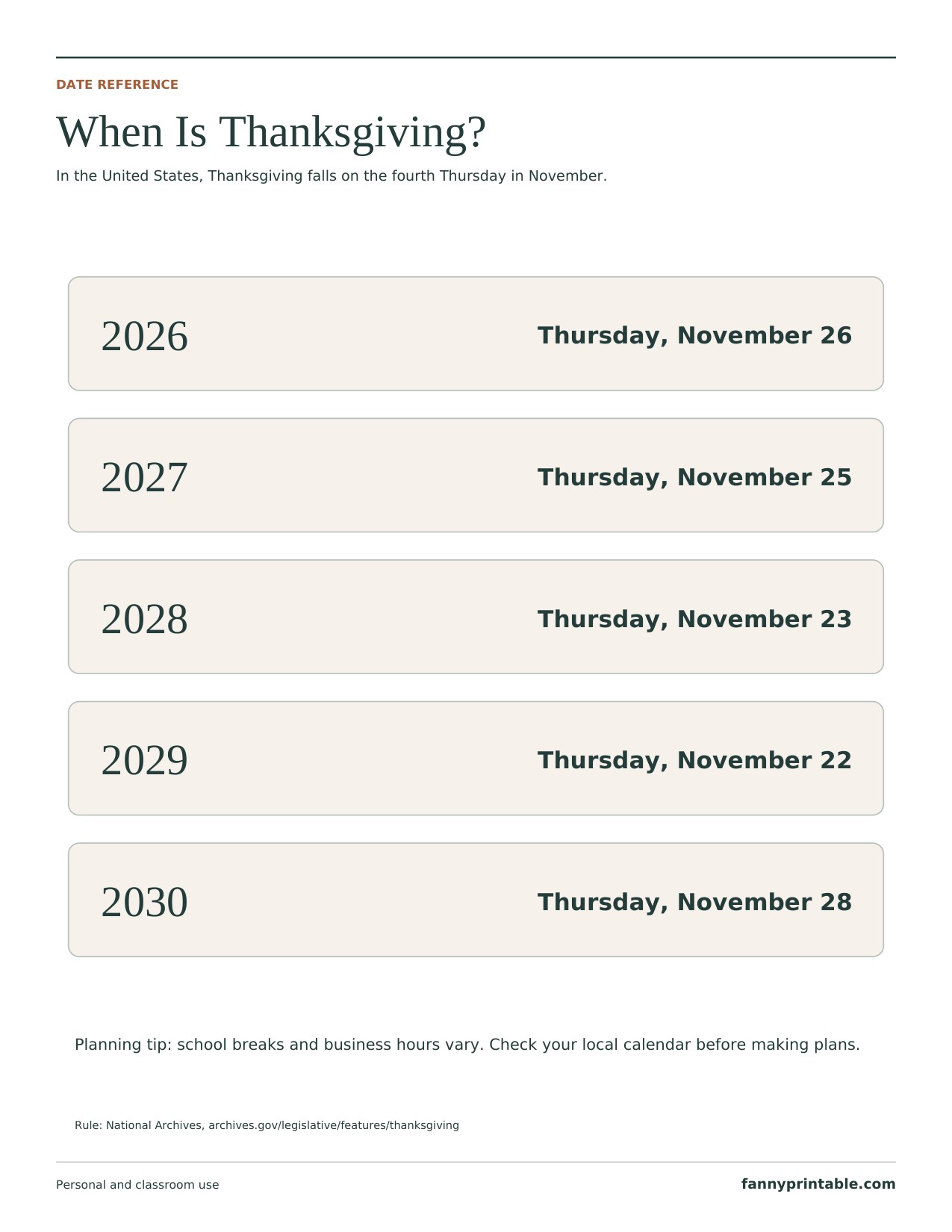
A printable reference showing U.S. Thanksgiving dates from 2026 through 2030.
Download U.S. Thanksgiving Date Reference PDF
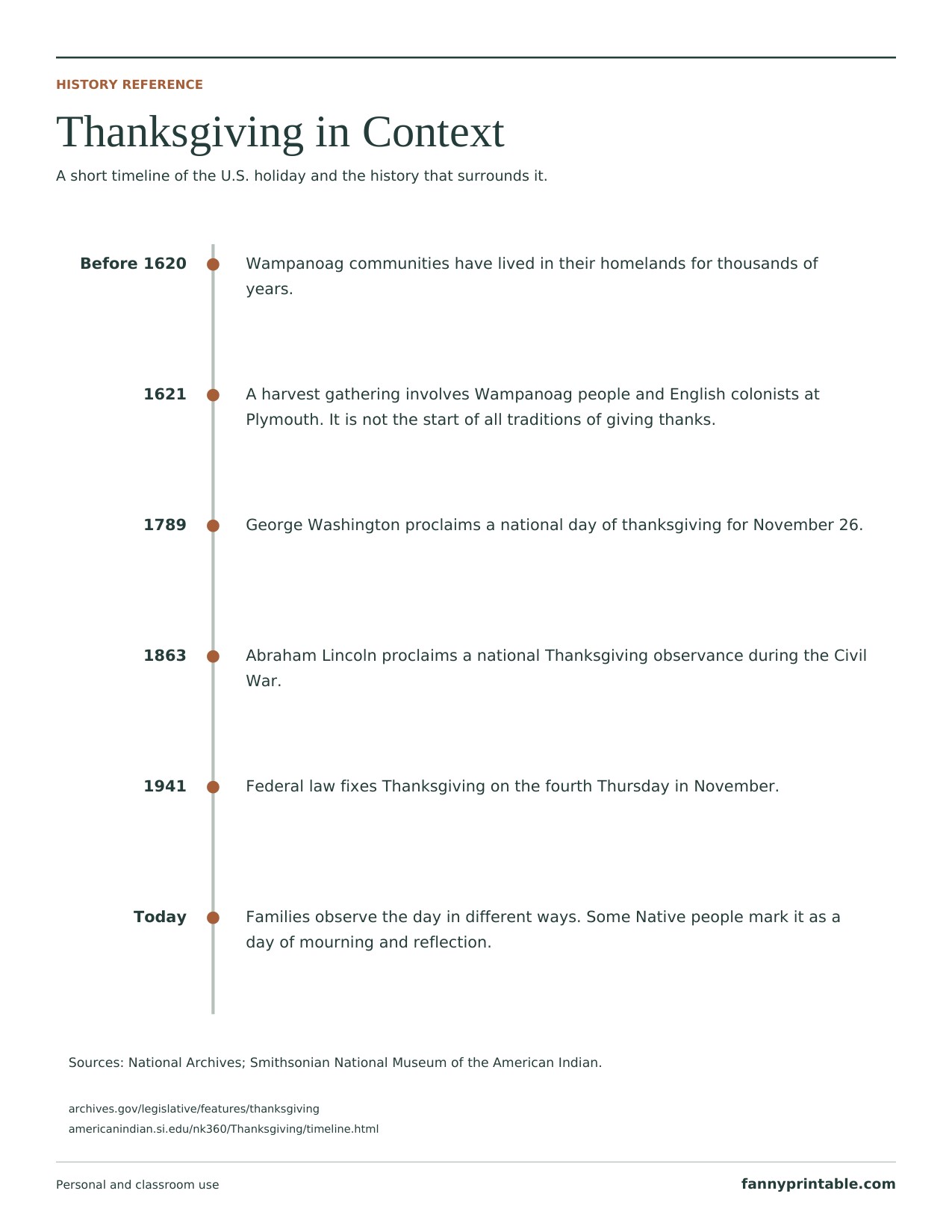
A carefully framed timeline connecting Wampanoag history, the 1621 gathering, and the U.S. holiday.
Download Thanksgiving History Timeline PDF
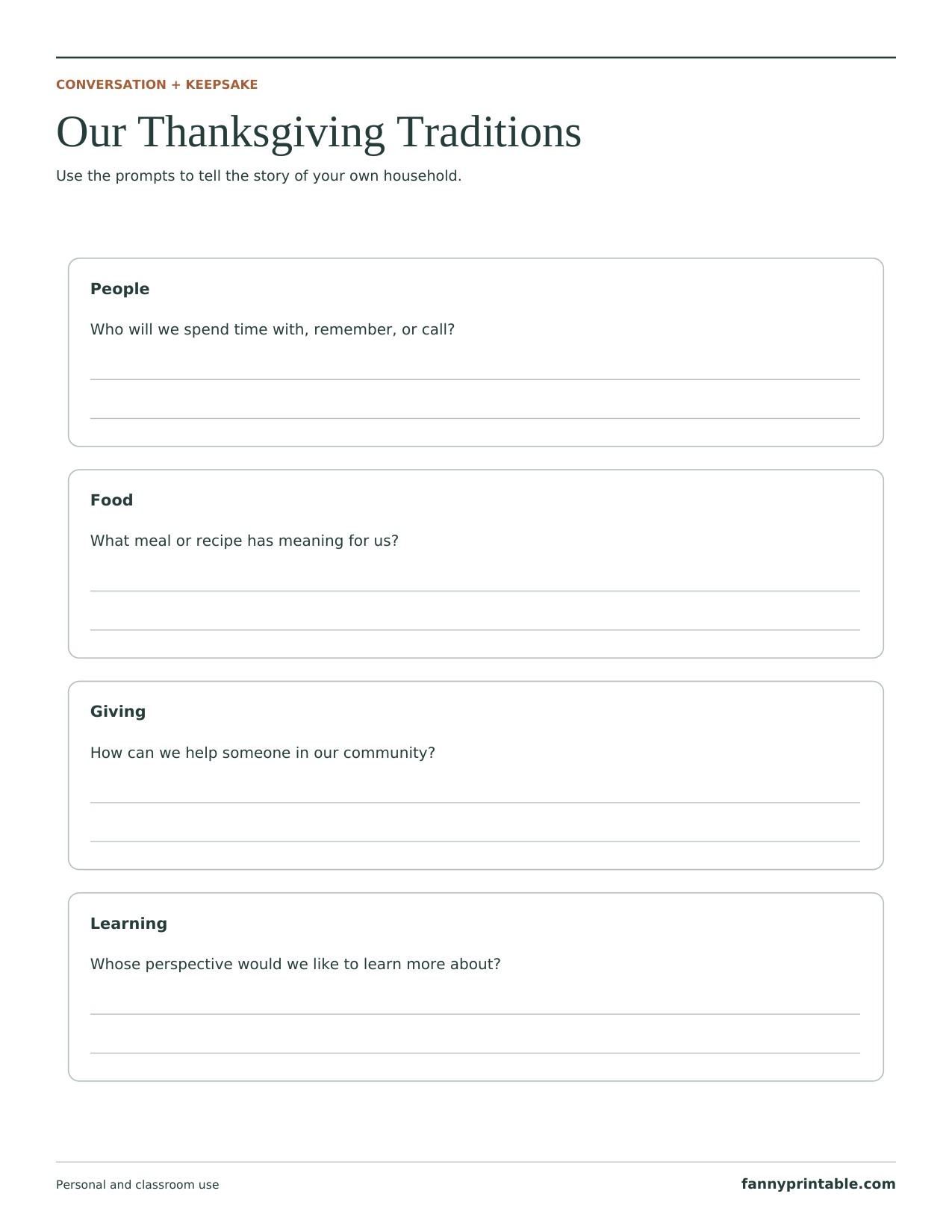
A household discussion sheet with prompts about people, food, giving, and learning.
Download Thanksgiving Traditions Conversation Sheet PDF
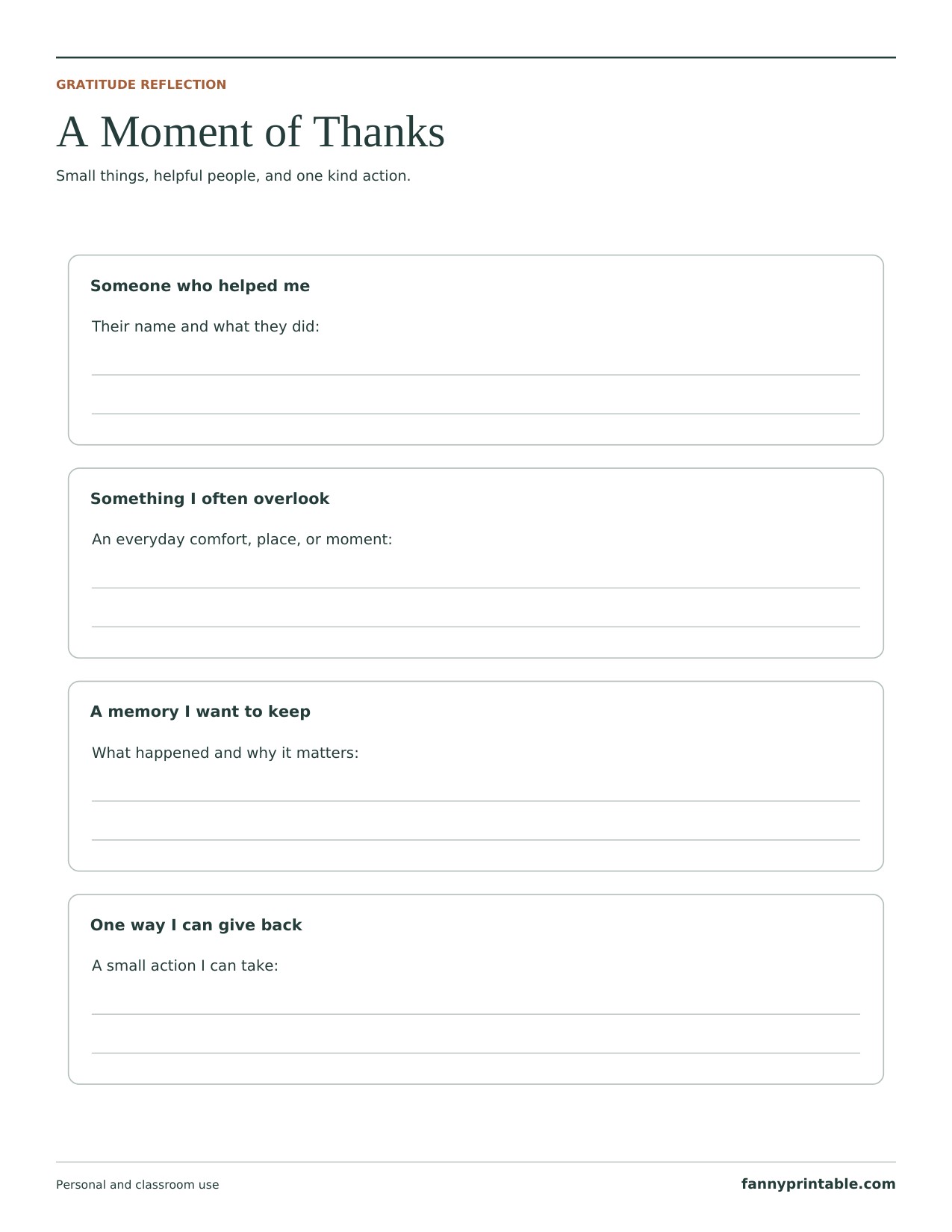
A printable reflection sheet with spacious prompts about help, everyday comforts, memories, and giving.
Download Thanksgiving Gratitude Reflection PDF
The date reference is useful for keeping future plans in view. The history timeline offers a starting point for further reading, while the traditions and gratitude sheets invite people to write about their own experiences. Use the history page with the linked sources rather than treating a short worksheet as the whole story.
What Do People Do on Thanksgiving?
There is no single required way to spend the day. A household may gather for a meal, visit relatives, volunteer, make a phone call, watch a game, take a walk, or keep a quiet routine. Some people work, travel, or spend the day apart from family. Make plans that fit the people involved rather than assuming every household celebrates in the same way.
- Share a meal that reflects your household’s tastes and traditions.
- Invite people to name a specific person or moment they appreciate.
- Ask an older relative or friend about a meaningful family memory.
- Choose a practical way to help someone, after checking what help is welcome.
- Read a reliable source that adds a perspective you have not considered.
How to Plan a Thoughtful Thanksgiving Gathering
- Confirm who is coming and what time works for the group.
- Ask about meal preferences and practical accessibility needs.
- Decide which tasks people want to share, from setting the table to cleanup.
- Set out one quiet activity and one optional group activity.
- Leave room for people to participate, listen, or take a break.
- Keep the plan flexible enough for delayed arrivals or a change in energy.
A printed plan can reduce repeated questions. Write the meal time and any shared responsibilities on a page everyone can see. If children are helping, choose a clear job such as folding napkins or arranging place cards. Give each person a task with a beginning and an end instead of a vague request to “help out.”
Simple Activities for a Mixed-Age Group
A Quiet Table Activity
Set out Thanksgiving coloring pages or a Thanksgiving word search with pencils and crayons. Let people choose whether to join in. Put puzzle solutions aside so they are available when wanted without being visible immediately.
A Short Group Game
A Thanksgiving bingo game is easy to fit between other activities. Explain the winning pattern before the first call, and choose a pace that lets everyone find the words on their cards. A friendly game does not need a large prize or a long series of rounds.
A Gratitude Craft or Conversation
Use a thankful turkey craft or the reflection sheet to collect individual thoughts. Offer examples such as a helpful neighbor, a favorite place, or a small comfort. Let someone draw or speak instead of write, and do not require a personal answer to be shared aloud.
Questions About Thanksgiving
Does Thanksgiving Fall on the Same Date Every Year?
No. In the United States, it follows the fourth Thursday in November, so the date changes. Use the year-specific date rather than copying the number from an old calendar.
Is a Turkey Meal Required?
No particular meal is required for a household gathering. Choose food that suits the people attending and the traditions you want to share.
How Can Children Learn About the Holiday Respectfully?
Separate gratitude activities from historical claims. Read material that includes Native perspectives, use the names of specific communities where relevant, and explain that one celebration does not describe the entire history. Invite questions instead of asking children to memorize an overly simple story.